
Introduction
When dentists evaluate implant CE programs, attention tends to fall on course format, duration, credit hours, and cost. The instructor’s credentials get less systematic scrutiny — despite being the variable most directly linked to the clinical utility of what gets taught.
Two programs with identical formats can produce very different outcomes depending on who is at the front of the room — and more importantly, who is standing beside you when you place your first implant in a live patient. This article gives dentists a framework for evaluating that, then applies it directly to the faculty leading HTDS implant training.
What Actually Qualifies Someone to Teach Implant Placement
There is no single credential that functions as a universal marker of implant teaching competence. The relevant qualifications are a combination of three things.
Active Clinical Practice
The most important single indicator is whether the instructor is currently placing implants in clinical practice. This matters for reasons that go beyond general credibility.
Implant protocols evolve. Surface technology, digital planning workflows, loading protocols, and complication management have all shifted in the past decade. An instructor who is actively practicing encounters these changes as they happen. One who is not may be teaching a version of the field that no longer reflects current consensus.
More practically, active practice keeps surgical judgment current. When an instructor discusses complication management in a CE setting, that discussion should reflect what they encountered last month — not historical cases from a previous career phase.
Case Volume and Complexity Range
Instructors who have placed several hundred implants have encountered the clinical variability that lower-volume practitioners have not: unexpected bone density, proximity to anatomical structures, prosthetic complications, and early and late failure presentations. This breadth is not credentials for its own sake — it directly determines the depth of instruction.
An instructor who has placed 50 implants can teach a drilling sequence. An instructor who has placed 500 can teach that sequence in the context of when it breaks down, how to recognize early deviation, and what the recovery options are.
Hands-On Teaching Experience
Surgical skill and teaching skill are different competencies. The most effective instructors in hands-on CE formats have developed the specific ability to observe a participant’s drilling technique, identify the error in real time, and provide correction the participant can apply immediately. This requires a different cognitive mode than performing the procedure.
Instructors with substantial hands-on teaching experience — across multiple cohorts, with participants at varying baseline levels — have refined that observational and corrective skill in a way that first-time instructors have not. That experience gap shows in the quality of intraoperative supervision.
Four Questions to Ask About Faculty Before Enrolling
Is the instructor currently in active private practice?
The answer should be yes. Ask specifically whether they are placing implants in their current clinical work — not whether they have implant training or historical credentials.
What is their approximate case volume?
A specific number is more informative than a general characterization. Instructors comfortable with this question typically have the volume to answer it directly.
Have they taught in hands-on formats previously?
Ask how many cohorts the instructor has supervised and in what formats. First-time instructors in live patient courses carry a different risk profile than experienced ones.
How do they approach complication management?
This question reveals whether the instructor teaches from a defensive framework — what to avoid — or a recovery framework — what to do when something goes wrong. Both are necessary. The latter requires case breadth that not all instructors have.
The Institutional Factor: How the Program Uses the Instructor
Faculty credentials are necessary but not sufficient for a high-quality CE experience. The organization running the course determines how faculty expertise is deployed — what supervision ratio is maintained during live cases, how cases are selected to match participant experience, whether pre-surgical briefing and post-surgical debrief are structured components or informal afterthoughts.
A single credentialed instructor running a 30-participant course without additional faculty support provides a structurally different experience than a program with a defined supervision model and faculty team with complementary specializations. The question is not only who the instructor is — it is how the program is designed to use their expertise.
How Dr. Ameen Holds Up Against That Framework
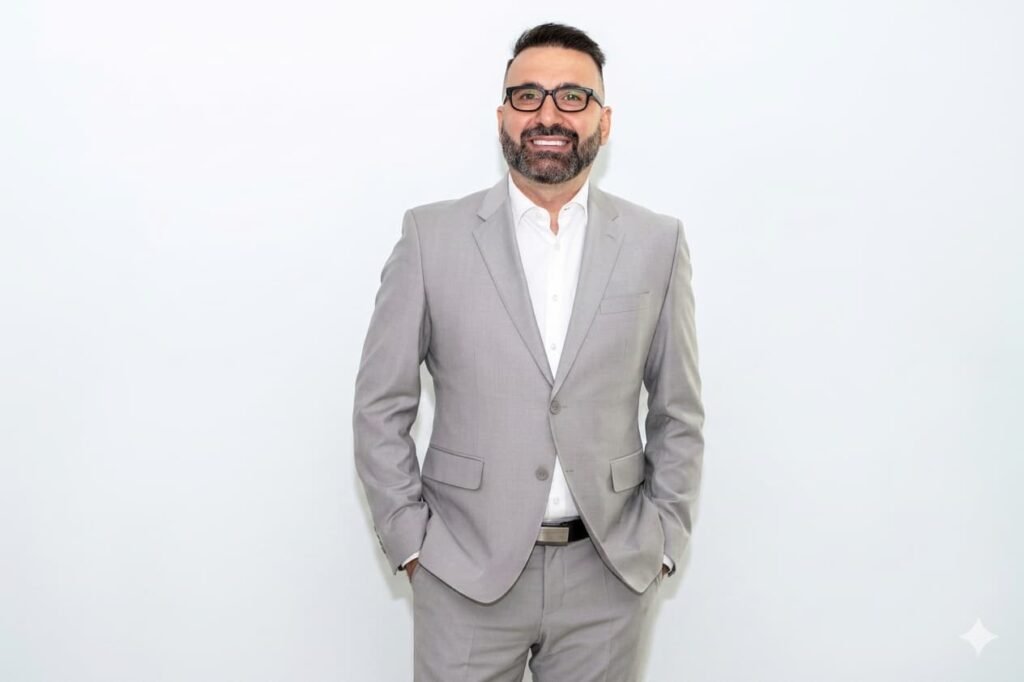
The four questions above are not rhetorical. They are the criteria a dentist investing in implant CE should apply to any instructor — including the faculty leading HTDS courses. Here is how Dr. Ahmed Ameen Al-Obaidi answers each one.
Is the instructor currently in active private practice?
Yes. Dr. Ameen currently operates four active dental practices across Ontario — Tomken Dental, Redwood Dental, Sky Dental, and Barton Dental. He is not a retired clinician or an academic who stepped back from practice to teach. The protocols he teaches are the protocols he is using in his own clinics.
What is their approximate case volume?
Over more than 20 years of surgical practice specializing in implant surgery, Dr. Ameen has worked with thousands of patients across four continents. That case breadth — across different bone types, anatomical presentations, systemic profiles, and prosthetic requirements — is what distinguishes instruction that covers the full clinical range from instruction that covers the standard case.
Have they taught in hands-on formats previously?
Dr. Ameen has worked directly with hundreds of dentists through HTDS implant training programs. That teaching history spans multiple cohorts and includes dentists at different baseline levels — from GPs placing their first implant under supervision to clinicians refining established protocols. The observational and corrective skill that comes from that volume of intraoperative supervision is not something that transfers from a first-time instructor.
How do they approach complication management?
The HTDS curriculum addresses complication management from a recovery framework, not a defensive one. The difference matters: a defensive framework tells you what to avoid; a recovery framework tells you what to do when avoidance fails. That distinction requires case experience deep enough to have encountered, managed, and resolved complications across a range of presentations — which 20 years of active surgical practice provides.
Clinical Takeaway
Implant CE faculty credentials are not a checkbox item. They are a primary predictor of whether the instruction you receive will reflect what current implant practice actually requires.
The framework is simple: active practice, case breadth, hands-on teaching experience, and a complication management approach grounded in recovery rather than avoidance. Apply it to every program you evaluate.
To review the full HTDS course structure and faculty profile, visit the Dental Implant Training page or explore the Hands-On Implant Courses overview.