
Dental implant training for dentists is structured continuing education that teaches you to diagnose, plan, place and restore implants safely. Good programs combine theory, CBCT-based planning, prosthetic design and supervised surgery, ideally on live patients. Most general dentists build competence in stages, starting with straightforward single implants before moving to grafting or full-arch cases.
Implants are a predictable treatment when they are planned and placed well. A 2019 meta-analysis in the Journal of Dentistry estimated 10-year implant survival at 96.4%, falling to 93.2% when missing follow-up data were accounted for. That gap is a reminder that outcomes depend on case selection, technique and maintenance, which is what training should teach. This guide from High Tech Dental Seminars (HTDS) explains what implant training covers, how formats compare, how long learning implant dentistry takes and how to choose a course.
What Is Dental Implant Training for Dentists?
Dental implant training is post-graduate education, usually continuing education (CE), that develops the clinical judgment and surgical and restorative skills needed to treat patients with implants. It covers the full workflow, from case selection and imaging to placement, restoration, complications and long-term maintenance.
Courses are offered by universities, study clubs, manufacturers and private training organizations. They range from one-day lectures to multi-month residencies with live-patient surgery. Most award CE credits, but the depth of training varies widely. Two courses with the same title can differ completely in how many implants each participant actually places.
Can General Dentists in Canada Place Implants?
Yes. In Canada, general dentists may place and restore dental implants without a separate implant licence or specialty designation. They are expected to practise only within their competence, so the dentist must have adequate training and experience for each case they accept and should refer cases beyond it.
This makes training the dentist’s responsibility rather than a formality. Regulators also set ongoing CE requirements. In Ontario, the Royal College of Dental Surgeons of Ontario (RCDSO) requires at least 90 continuing education points in each three-year cycle, and other provinces set their own rules. Implant courses can count toward these totals, depending on the provider and category. Our article on what counts toward dental CE certification in Canada explains more.
Liability and titles are part of the same picture. Before placing your first implants, confirm with your professional liability provider that implant surgery is within your coverage, and keep records of your training. Implant dentistry is not one of the 11 dental specialties recognized in Ontario, so dentists cannot describe themselves as implant specialists. Titles should describe training rather than imply specialist status.
What Do Dentists Learn in Implant Training?
A complete implant curriculum covers four areas: diagnosis and planning, surgical protocols, prosthetic restoration, and complications with maintenance. Courses that teach only surgery can leave dentists unprepared for the restorative decisions that help determine whether an implant succeeds long term.
Diagnosis and treatment planning
You learn to assess medical history and risk factors, examine the site and read CBCT scans for bone volume, density and anatomical landmarks such as the inferior alveolar nerve and maxillary sinus. Planning is prosthetically driven: the final tooth position decides where the implant goes. Many programs also introduce guided implant surgery and digital planning software.
Surgical protocols
Core surgical skills include flap design, osteotomy preparation following the manufacturer’s drilling sequence, managing different bone densities, achieving primary stability, controlling insertion torque, and suturing. Advanced courses add immediate placement, socket and ridge grafting, sinus augmentation and full-arch protocols.
Prosthetic restoration
Restorative training covers abutment selection, emergence profile, screw-retained versus cement-retained crowns, impressions or digital scans, and occlusion. Screw-retained restorations are easier to retrieve, while cement-retained crowns require careful removal of excess cement to protect peri-implant tissues.
Complications and maintenance
Dentists learn to prevent and manage surgical complications, screw loosening, fractures and peri-implant disease, and to set up recall and hygiene protocols. The Howe meta-analysis found lower survival in patients aged 65 and older in its sensitivity analysis, which is one reason maintenance planning belongs in every course.
Competency | Foundational Level | Advanced Level |
Case selection | Single implants in healed sites with adequate bone | Compromised sites, multiple implants, full arch |
Imaging | Reading CBCT for single sites | Full-arch planning, guided workflows |
Surgery | Standard placement, primary stability | Immediate placement, grafting, sinus lifts |
Prosthetics | Single crowns | Bridges, overdentures, full-arch prostheses |
Complications | Recognition and referral | Management and revision |
Which Implant Training Format Fits Your Stage?
The right format depends on what you need next. Lectures build knowledge, models and simulation build hand skills, and supervised live-patient surgery builds clinical judgment. Multi-module programs combine all three over several months, which suits dentists who want to bring implants into everyday practice.
Format | What You Do | Strengths | Limits |
Lecture or online course | Learn theory and see cases | Low cost, flexible, good foundation | No surgical skill development |
Model or simulation workshop | Drill and place implants in models or synthetic bone | Safe repetition of drilling and handling | No real tissue, bleeding or patient factors |
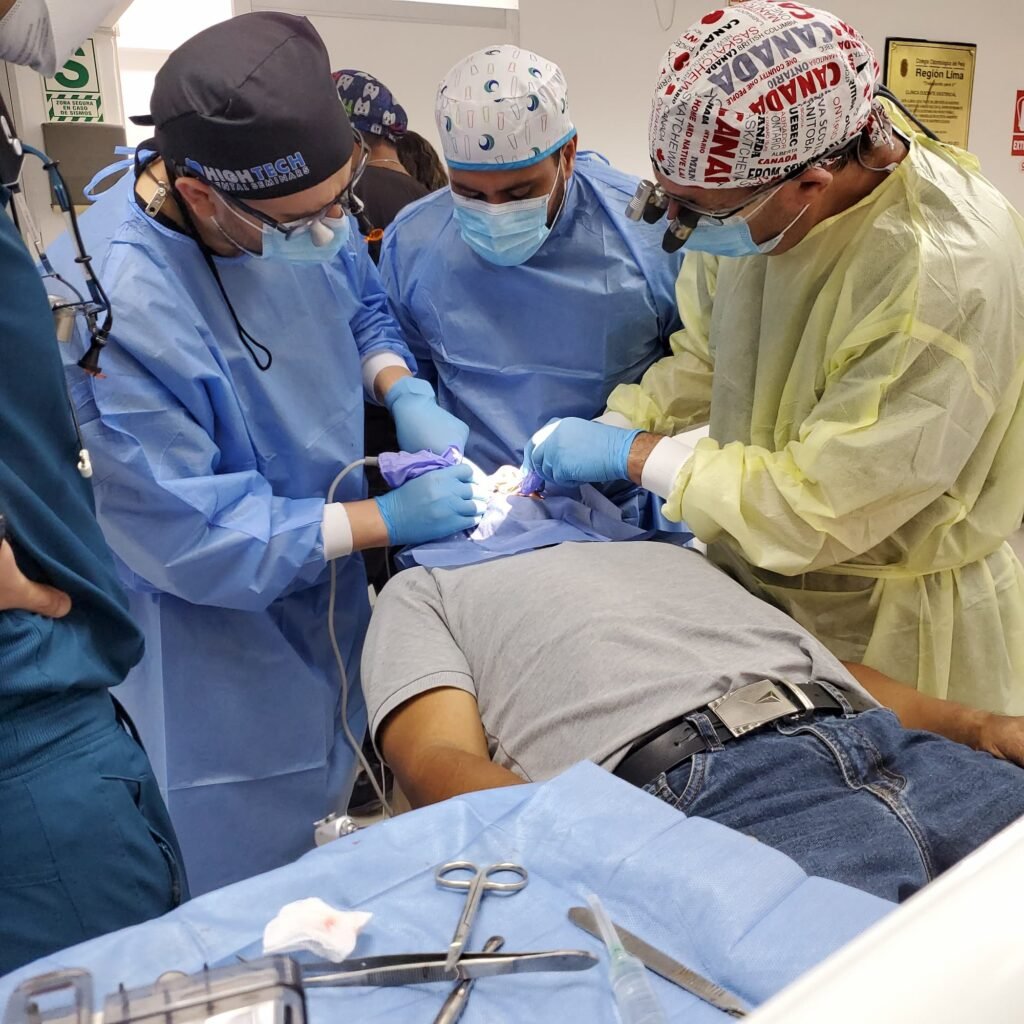
Live-patient course | Place implants on screened patients under supervision | Real anatomy and decision-making | Requires strong supervision and patient safeguards |
Multi-module residency | Lectures, hands-on and surgery over months | Progressive learning, case follow-up, mentorship | Larger time and cost commitment |
Our international implant training guide explores live-patient training in more detail.
How Long Does Learning Implant Dentistry Take?
Learning implant dentistry usually takes months to years, not a weekend. Most dentists complete foundational training over several days to several months, place their first straightforward cases with mentorship, then add advanced procedures as their case numbers and confidence grow. The pace depends on case volume after training.
Stage | Typical Focus | Signs You Are Ready to Move On |
1. Foundations | Biology, planning, CBCT, restorative principles | You can plan a single implant case end to end |
2. Supervised surgery | First placements under direct supervision | You achieve stability and position reliably in simple sites |
3. Independent simple cases | Single implants in good bone, with case review | Consistent outcomes and follow-up records |
4. Advanced procedures | Immediate placement, grafting, sinus lifts | Comfort managing soft tissue and complications |
5. Full arch | All-on-X style rehabilitation | Strong surgical and prosthetic experience together |
Your first independent cases deserve extra care. Choose healthy, non-smoking patients with healed sites, good bone volume and no nearby anatomical risks. Plan each one fully on CBCT, ask a mentor to review the plan and keep records you can learn from. A small number of well-chosen early cases builds more confidence than many difficult ones.
Learning implant dentistry is easier when you keep placing implants soon after a course. Skills fade without cases, so plan how you will find suitable patients before you enrol. If you are just starting, read whether a dental implant course for beginners is right for you.
How Do You Evaluate a Dental Implant Course?
Evaluate an implant course by what each participant actually does, who supervises, and what support continues afterward. Ask how many implants you will personally place, how patients are screened, whether restorative training is included, which CE recognition applies and whether mentorship continues once you are back in practice.
Question to Ask | Why It Matters |
How many implants will I place myself, and how many will I assist on? | Observing is not the same as placing |
Who are the instructors, and what is the supervision ratio during surgery? | Real-time correction prevents habits forming |
How are patients screened and consented? | Patient safety and ethical standards |
Does the course cover restoration as well as surgery? | Prosthetic decisions drive long-term success |
Which implant system is used, and can I use it at home? | Familiarity shortens your learning curve |
How are CE credits recognized by my regulator? | Ensures credits count toward your cycle |
What support exists after the course? | Case review helps your first independent cases |
Watch for warning signs, too:
- No clear number of implants you will personally place.
- Surgery taught without any restorative content.
- Vague answers about patient screening or supervision.
- No way to contact instructors once the course ends.
- Pressure to treat complex cases before you have mastered simple ones.
How Much Does Dental Implant Training Cost?
Dental implant training costs vary with course length, the number of live-patient placements, materials, faculty and travel. Lecture courses cost the least; residencies and live-patient programs cost more because they include implants, surgical supplies, patients and supervision. Compare the cost per implant placed, not just the headline fee. A cheaper course with few personal placements can cost more per skill gained than a longer program with guaranteed supervised cases.
Factors that change the cost:
- Number of modules and days.
- Implants placed per participant.
- Whether implants, grafting materials and CBCT planning are included.
- Faculty and supervision ratio.
- Travel, accommodation and time away from practice.
At HTDS, tuition for our Ontario residency is listed as all-inclusive, and payment plans are available. Current fees are shown on each course page.
Implant Training at High Tech Dental Seminars
High Tech Dental Seminars is a dental education company run by dentists for dentists, based in Hamilton, Ontario. We are a Nationally Approved PACE Program Provider for FAGD/MAGD credit (Provider ID 394371, July 1, 2025 to June 30, 2028). Approval does not imply acceptance by any regulatory authority or AGD endorsement.
Program | Format | Key Details |
6 modules over 9 months in Ontario | Lectures in Mississauga, surgery in Hamilton; 5 guaranteed placements plus 5 assists; no prior implant experience required; 140 Category 2 credits | |
6-day live-patient courses in Lima, Peru | Foundational, Advanced and All-on-X levels; 60 CE credits |
Our residency includes an ICOI Fellowship certificate and post-course mentorship from our lead instructor. You can meet our instructors before you decide.
Frequently Asked Questions
Do I need a special licence to place dental implants in Canada?
No. General dentists in Canada can place implants without a separate licence, but they must be competent for each case they treat. That means completing appropriate training, starting with simple cases and referring complex ones. Check your provincial regulator’s standards and CE rules.
How many implants should I place during training?
There is no national minimum, but more supervised placements build more confidence. Ask each course exactly how many implants you will place yourself, how many you will assist on and what case types are included. Personal placements under supervision matter more than total cases observed.
Is live-patient implant training safe for patients?
It can be when patients are carefully screened, informed and consented, and every procedure is planned and supervised by experienced clinicians. Ask any course how patients are selected, who supervises each surgery and how follow-up care is arranged after the course ends.
Should I learn surgery and restoration together?
Yes. Implant position is decided by the planned restoration, so surgical and prosthetic training belong together. Dentists who learn only placement can struggle with abutment choice, emergence profile or occlusion later. A complete course covers both sides of the workflow.
Do implant courses count toward my CE requirements?
Usually, but recognition depends on your regulator and the course category. In Ontario, the RCDSO sets the points and categories for each three-year cycle. Confirm how a course will be recognized before you register, and keep your certificates and records.
Plan Your Implant Training Pathway
Learning implant dentistry is a staged process: foundations first, supervised surgery next, then advanced procedures as your experience grows. The right course is the one that matches your current stage and keeps supporting you once you are back in your own operatory.
If you are deciding where to start, book a consultation with our team or browse our courses. We will help you choose between the Ontario residency and our international programs based on your experience and goals.