
Introduction
The number of implant training programs available to dentists has grown considerably. The marketing language across most of them has not. Hands-on training, live patient experience, expert faculty — these phrases appear on nearly every course page without much detail about what they actually mean in practice.
What separates a program that produces a confident, practicing implant dentist from one that produces a certificate and an unresolved skills gap comes down to a small number of structural variables. This article breaks those down.
The Four Training Formats — and What Each One Actually Delivers
Implant training programs generally fall into four structural categories. Understanding the differences is a prerequisite to evaluating any specific course.
Lecture-Only and Webinar Formats
These programs cover the theoretical foundation — anatomy, patient selection, prosthetic planning, complication recognition. They are appropriate as pre-course preparation or CE supplements. As standalone preparation for placing implants, they are not sufficient.
The gap is neuromotor, not conceptual. Implant placement requires tactile precision — drilling angulation, depth control, torque management — that video and lecture exposure alone cannot develop.
Typodont and Bone Model Training
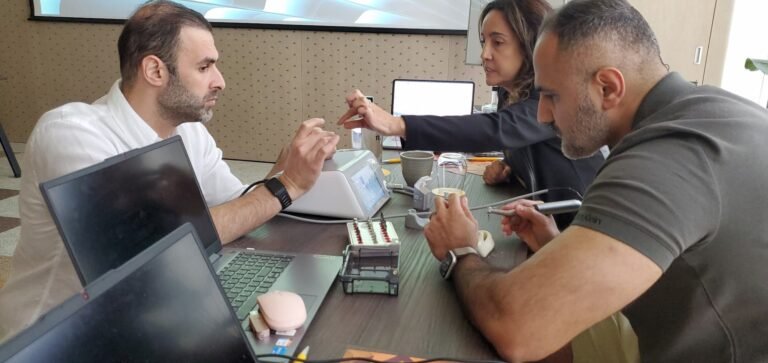
Synthetic bone model exercises form the procedural foundation of most structured implant programs. Practicing osteotomy preparation on a model develops drilling technique, tactile feedback interpretation, and instrument sequencing before clinical variables enter the picture.
Programs that include adequate model repetition — a minimum of 5 to 10 surgical exercises before live patient exposure — consistently produce better first-case outcomes than programs that move directly to live patients.
Live Patient Supervised Cases
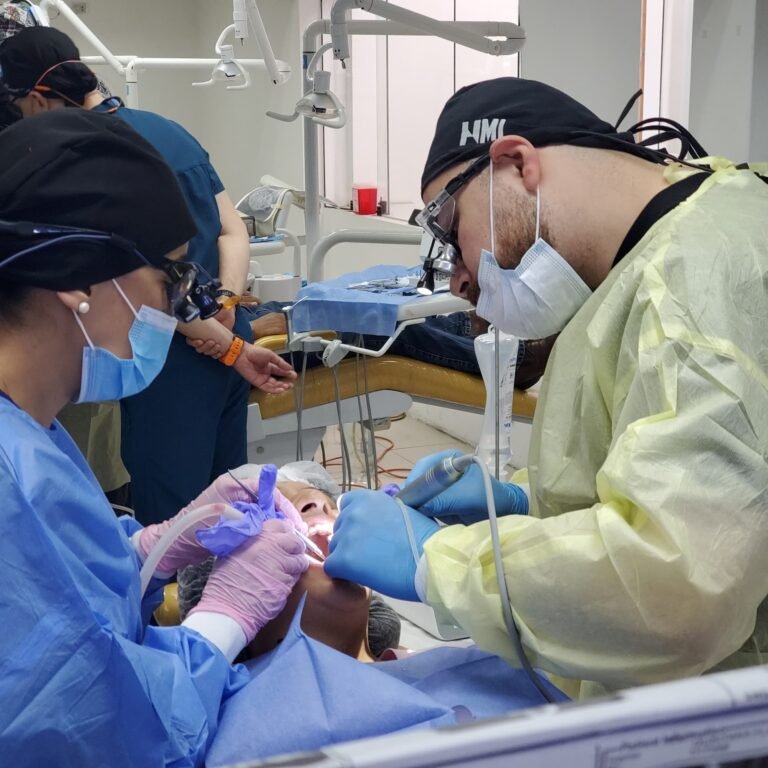
Live patient training under faculty supervision is where procedural competence is validated. The critical variable is supervision structure. A 30:1 participant-to-faculty ratio is a fundamentally different clinical experience than 6:1.
Programs with one-to-one or one-to-two faculty supervision during placement allow real-time correction of angulation, torque application, and tissue management — the specific variables that determine long-term outcomes.
Mentorship and Post-Course Guidance
Post-course mentorship programs extend the learning arc into early independent practice. These pair the dentist with a clinical mentor for their first independent cases — providing case review, protocol guidance, and troubleshooting support during the period when complication risk is highest.
Mentorship does not replace a structured course. It significantly reduces the complication rate during the first 10 to 20 independent placements.
What the Evidence Says About Training Format and Outcomes
Self-reported confidence after an implant course does not reliably correlate with placement accuracy unless hands-on training has been completed. Dentists following lecture-only programs consistently overestimate procedural readiness.
Programs that incorporate minimum viable model repetition followed by supervised live patient cases produce measurable reductions in early implant failure rates among newly trained clinicians. The mechanism is the difference between declarative knowledge — knowing the steps — and procedural knowledge — executing them under clinical conditions with real tissue resistance, patient movement, and consequence.
The practical implication: when evaluating a program, the number of supervised live patient placements per participant is a more reliable quality indicator than total course hours.
Frequently Asked questions
What is the participant-to-faculty ratio during live patient cases?
A ratio above 8:1 makes real-time supervision difficult. Ask specifically how many participants share one supervising faculty member during active surgical sessions — not the overall cohort size.
How many live patient placements does each participant complete?
The Canada residency guarantees a minimum of 5 live implant placements per participant (not 5 cases — placements could span multiple surgeries, e.g. 3 in one session and 2 singles), plus participants assist on 5 additional implant placements. That’s 10 total implant exposures and one of the only programs in Canada guaranteeing that volume.
Is the faculty actively placing implants in clinical practice?
Faculty who are currently placing implants teach with current protocol awareness. Academic credentials and clinical currency are not the same thing. Ask specifically whether faculty members are actively practicing implant dentistry.
Does the program include pre-course preparation?
Courses that require anatomy review, patient assessment frameworks, and prosthetic planning preparation before the hands-on component allow participants to use model and live patient time effectively. This structure consistently improves retention of procedural training.
What post-course support exists?
Ask whether the program offers case review support, mentorship, or faculty consultation access during early independent practice. Support during the first 20 independent cases has a higher clinical ROI than almost any additional course hour.
When a Training Program Is Not the Right Next Step
Not every general practitioner is at the stage where implant training is the appropriate investment. Dentists managing high restorative complexity without a stable workflow, or in practice environments where implant volume is unlikely to support a learning curve, may benefit from deferring.
A structured implant course requires significant investment — in time, cost, and the mental bandwidth to integrate a new surgical skillset. Entering that investment with the right practice foundation increases the probability of a positive outcome.
Clinical Takeaway
The structure of an implant training program matters more than its duration, credential, or marketing. The three variables that most reliably predict whether a dentist will practice implant dentistry confidently after completing a course are: supervised live patient volume, faculty-to-participant ratio during surgical sessions, and the availability of post-course support.
For dentists evaluating programs, those three factors are more informative than CE hour counts, course endorsements, or the implant system being taught.
For dentists ready to begin hands-on implant training, explore the HTDS Dental Implant Training program and the Hands-On Implant Courses overview.