
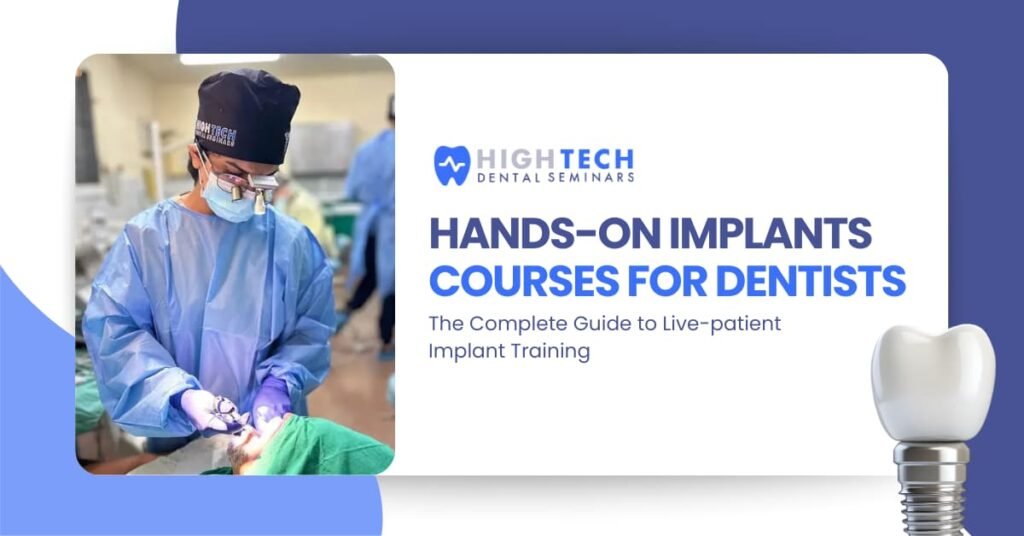
Dental implant education has evolved dramatically over the past two decades. As implant therapy has become a central component of modern restorative dentistry, the expectations placed on implant training programs have also changed.
In earlier stages of implant education, continuing education programs often relied primarily on lecture-based formats. These courses introduced implant concepts, discussed implant systems, and reviewed treatment planning principles. While these programs provided valuable theoretical knowledge, they frequently left dentists with limited practical confidence when performing implant procedures independently.
Today, the emphasis in implant education has shifted toward hands-on implant courses that prioritize clinical experience and procedural competency.
Dentists increasingly recognize that successful implant dentistry requires more than theoretical understanding. Predictable outcomes depend on a combination of surgical technique, prosthetic planning, anatomical knowledge, and clinical decision-making developed through experience.
Hands-on implant courses provide structured environments where dentists can develop these competencies under experienced mentorship. By combining didactic education with surgical simulation and live patient training, these programs allow practitioners to move from conceptual understanding to clinical execution.
For dentists seeking to incorporate implant therapy into everyday practice, structured hands-on training often represents the most effective pathway for developing surgical confidence and predictable treatment outcomes.
Why Hands-On Implant Courses Are Essential for Modern Implant Dentistry
Dental implants are widely recognized as one of the most predictable treatment modalities in dentistry.
Long-term clinical studies consistently report implant survival rates between 95% and 98% over ten years, reinforcing the reliability of implant-supported restorations when appropriate surgical and prosthetic protocols are followed.
Despite these favorable outcomes, many dentists remain hesitant to incorporate implant placement into their clinical workflow. One of the most common barriers is limited surgical exposure during initial training.
While dental school curricula often introduce implant concepts, they rarely provide sufficient surgical repetition for clinicians to develop procedural confidence.
As a result, dentists frequently graduate with an understanding of implant theory but limited experience performing implant surgery.
Hands-on implant courses address this gap by providing structured training environments where dentists can develop practical skills through supervised clinical experience.
These programs allow dentists to:
- Develop surgical skills through guided implant placement
- Understand CBCT-based implant treatment planning
- Practice implant osteotomy preparation and drilling protocols
- Learn prosthetic restoration workflows
- Observe and manage implant complications
- Gain confidence transitioning from theory to clinical application
By emphasizing procedural experience and mentorship, hands-on implant courses accelerate the development of surgical competence.
For many dentists, these programs represent the turning point where implant dentistry becomes a realistic addition to their clinical practice.
What Are Hands-On Implant Courses?
Hands-on implant courses are continuing education programs designed to teach dentists the clinical protocols required for implant placement and restoration through direct procedural experience.
Unlike lecture-based courses that focus primarily on theoretical instruction, hands-on implant education integrates practical training with clinical mentorship.
Most comprehensive programs include several educational components designed to support progressive learning.
Didactic Implant Education
Before performing surgical procedures, participants typically begin with structured educational sessions reviewing the scientific foundations of implant dentistry.
These lectures focus on understanding the biological and biomechanical principles that guide implant treatment.
Common topics include:
- Principles of osseointegration
- Implant macro and micro design
- Bone biology and healing
- Prosthetically driven treatment planning
- Surgical instrumentation and implant systems
- Implant biomechanics and load distribution
Didactic education establishes the conceptual framework necessary for understanding surgical protocols and restorative workflows.
Dentists who understand why each clinical step is performed are better equipped to make sound clinical decisions during treatment.
Surgical Simulation Training
Many implant courses incorporate simulation training to allow dentists to practice surgical techniques in a controlled environment before performing procedures on patients.
Simulation training may involve:
- Implant surgical models
- Synthetic bone blocks
- Typodont simulations
- Cadaver specimens in advanced programs
These exercises allow dentists to develop familiarity with implant surgical kits and procedural workflows.
Key competencies developed during simulation training include:
- Implant osteotomy preparation
- Drilling sequence control
- Implant angulation management
- Torque control during implant placement
- Surgical ergonomics and positioning
Simulation exercises help dentists build muscle memory and develop procedural awareness before entering live surgical environments.
While simulations cannot replicate every clinical variable encountered in real patients, they serve as an important intermediate step in implant education.
Live Patient Implant Training
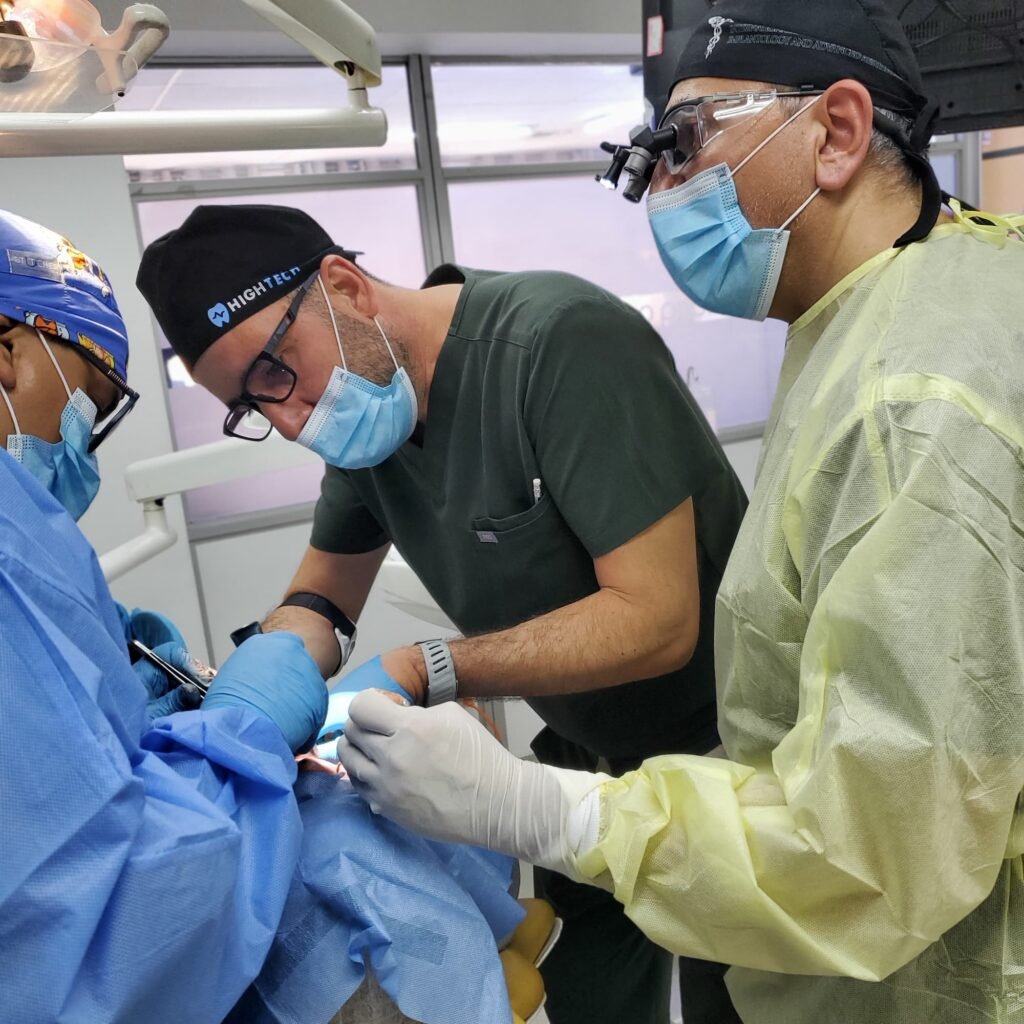
The most advanced hands-on implant courses incorporate live patient surgical experience under instructor supervision.
This training model allows dentists to participate in real implant procedures while receiving direct guidance from experienced implant clinicians.
Live patient training typically includes participation in:
- Case selection and diagnosis
- CBCT-based surgical planning
- Implant osteotomy preparation
- implant placement procedures
- suturing techniques
- post-operative evaluation
Working with real patients introduces clinical variables that cannot be replicated through simulations.
Dentists encounter differences in:
- Bone density
- Anatomical structures
- Surgical access limitations
- Soft tissue conditions
Exposure to these variables helps clinicians develop surgical judgment and adaptability.
For many dentists, live patient training represents the most transformative component of implant education.
Hands-On Implant Courses vs Lecture-Based Training
Continuing education in implant dentistry is often delivered in two formats: lecture-based education and hands-on clinical training. While lectures can provide a strong theoretical foundation, they rarely offer the practical experience required for dentists to confidently place implants in clinical practice.
Lecture-based implant courses are typically designed to introduce core concepts such as implant biomechanics, treatment planning, and restorative protocols. These programs can be valuable for understanding the science behind implant dentistry and reviewing emerging technologies.
However, many dentists discover that understanding implant concepts does not automatically translate into surgical confidence.
Placing implants requires the development of clinical judgment, tactile awareness, and surgical workflow familiarity—skills that are best developed through hands-on experience.
For this reason, modern implant education increasingly emphasizes hands-on implant courses that allow dentists to practice surgical procedures in supervised clinical environments.
Limited Surgical Exposure in Lecture-Based Courses
Lecture-only programs often rely on surgical videos or demonstrations. While these presentations can be informative, observing a procedure is very different from performing it.
Developing surgical competency requires dentists to gain experience with:
- Implant osteotomy preparation and drilling sequences
- Implant angulation and depth control
- Soft tissue management during surgery
- Implant placement protocols
Hands-on training allows dentists to build the muscle memory and surgical awareness necessary for predictable implant placement.
Lack of Real Clinical Variables
Lecture presentations often showcase ideal cases with favorable anatomy and straightforward treatment plans. In real clinical practice, however, implant cases frequently involve challenges such as:
- Limited bone volume
- Anatomical constraints
- Prosthetic space limitations
- Patient-specific restorative considerations
Hands-on implant training exposes dentists to these clinical realities and teaches them how to adapt surgical and restorative protocols accordingly.
Minimal Procedural Repetition
Surgical skills improve through repetition and guided practice.
Lecture-based courses rarely provide opportunities for dentists to repeat procedures or refine their surgical technique. In contrast, hands-on implant courses allow participants to perform key steps of implant surgery multiple times while receiving instructor guidance.
This repetition is critical for developing confidence, precision, and procedural consistency.
Limited Mentorship and Surgical Feedback
In lecture settings, interaction between instructors and participants is often limited.
Hands-on implant training environments allow instructors to provide real-time feedback on surgical technique, treatment planning decisions, and clinical workflow.
This mentorship component is one of the most valuable aspects of advanced implant education, allowing dentists to refine their approach under the guidance of experienced implant clinicians.
What Makes Hands-On Implant Training at High Tech Dental Seminars Different
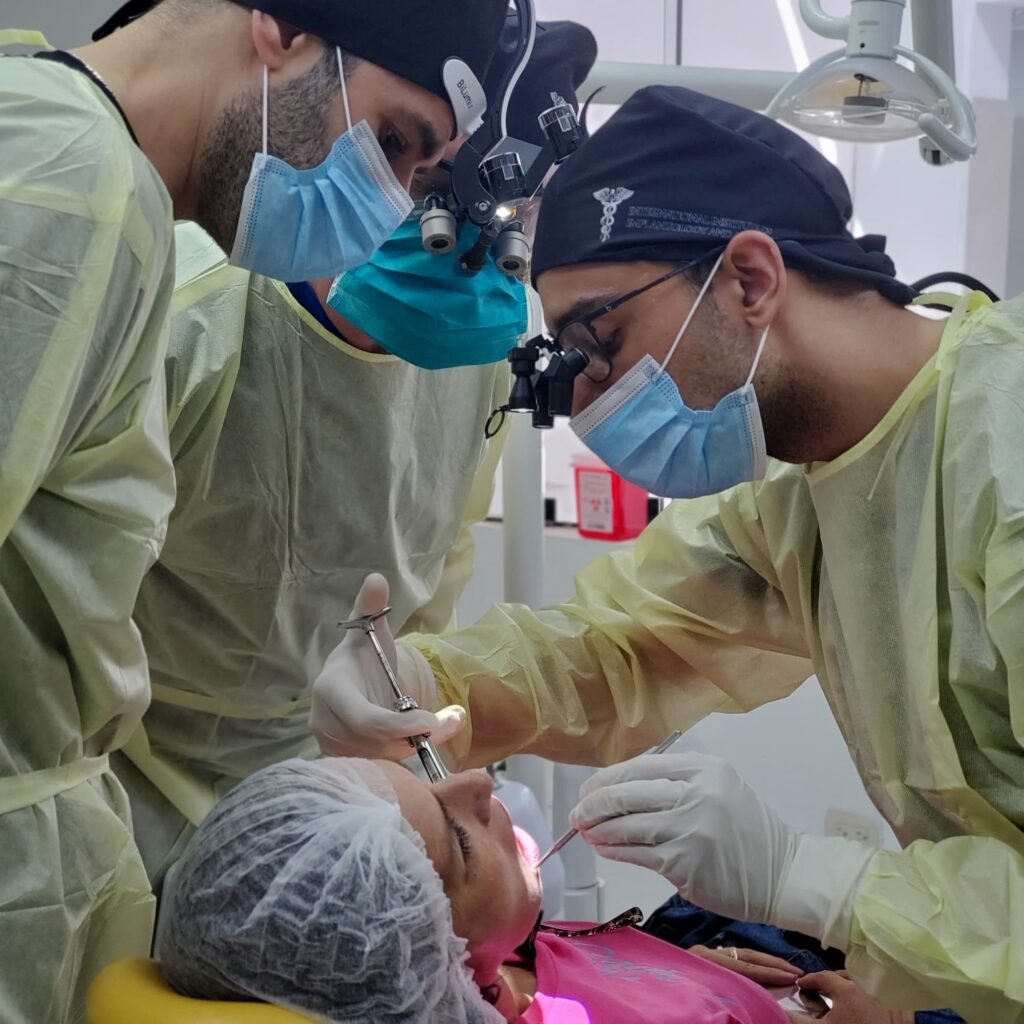
High Tech Dental Seminars (HTDS) was founded with a clear philosophy: dentists learn implant dentistry best by doing it.
Rather than focusing solely on theoretical education, HTDS programs are designed to provide immersive clinical training that allows dentists to develop real surgical and prosthetic skills.
HTDS hands-on implant courses emphasize:
- Live patient implant training under expert supervision
- Structured surgical mentorship from experienced instructors
- Practical treatment planning and case selection education
- Implant prosthetic planning and restoration workflows
- Real-world clinical decision-making
Participants gain exposure to the full implant workflow—from diagnosis and treatment planning to surgical placement and prosthetic restoration.
By combining didactic instruction, hands-on surgical practice, and live patient experience, HTDS courses help dentists bridge the gap between implant theory and real clinical application.
For many dentists, this practical training environment is what ultimately allows them to transition from learning about implants to confidently integrating implant procedures into everyday practice.
Where Dentists Can Take Hands-On Implant Training
Hands-on implant training programs are offered in a variety of formats and locations, allowing dentists to gain practical surgical experience in structured educational environments. At High Tech Dental Seminars (HTDS) some programs are delivered through residency-style training in established dental facilities, while others take place through international clinical training programs where dentists can participate in supervised implant procedures.
Both formats provide valuable opportunities for dentists to develop surgical skills, expand clinical confidence, and gain exposure to real implant cases.
Residency-style implant training programs are typically conducted in fully equipped dental clinics or educational centers where dentists can participate in structured training over a defined period.
In Canada, hands-on implant education often focuses on:
- Implant treatment planning and diagnosis
- Guided surgical protocols for implant placement
- Implant prosthetic planning and restoration
- Case selection and risk assessment
- Management of implant complications
These programs allow dentists to work in a controlled clinical environment with access to modern diagnostic technologies such as CBCT imaging and digital treatment planning tools.
Residency-style programs also emphasize step-by-step surgical mentorship, allowing participants to observe experienced clinicians, assist in procedures, and progressively develop the skills required to place implants confidently.
For dentists who want a structured pathway into implant dentistry, residency-based training environments provide a strong foundation for learning both surgical and restorative aspects of implant treatment.
International Hands-On Implant Training Programs
In addition to residency-style programs, many dentists participate in international implant training programs where they can gain exposure to a larger number of implant cases within a short period of time.
International training environments often provide opportunities for dentists to:
- Observe and assist in multiple implant procedures
- Participate in supervised implant placements
- Develop surgical workflow familiarity
- Learn treatment planning for diverse clinical situations
Programs hosted in countries such as Peru and Cuba provide immersive training experiences where dentists can work alongside experienced implant clinicians while treating real patients under supervision.
These international courses often combine:
- Didactic education in implant treatment planning
- Hands-on surgical training
- Live patient implant procedures
Because these programs are typically delivered in intensive training formats, participants may gain exposure to a wide range of clinical cases, including implant placement in varying anatomical conditions.
For many dentists, international training experiences provide an opportunity to accelerate their surgical learning curve while developing practical implant placement skills.
Combining Structured Education with Clinical Experience
Both residency-based programs and international training experiences play an important role in modern implant education.
By combining theoretical education, surgical mentorship, and hands-on clinical exposure, these programs help dentists transition from learning implant concepts to confidently performing implant procedures in their own practices.
For clinicians seeking to expand their treatment capabilities, participating in hands-on implant training programs—whether locally or internationally—can provide the practical experience needed to develop surgical confidence and clinical predictability.
What Dentists Learn in Hands-On Implant Training
Comprehensive implant training programs teach the entire implant treatment workflow, from diagnosis through final restoration.
This integrated approach ensures dentists understand how surgical decisions influence prosthetic outcomes.
Key areas of clinical education typically include treatment planning, surgical protocols, restorative workflows, and complication management.
Implant Treatment Planning
Successful implant therapy begins long before surgical placement.
Treatment planning requires careful evaluation of anatomical structures, prosthetic requirements, and patient-specific considerations.
During hands-on implant courses, dentists learn to evaluate:
- Bone volume and density
- Anatomical structures such as the inferior alveolar nerve and maxillary sinus
- Prosthetic space requirements
- Occlusal relationships
- Systemic medical considerations affecting healing
CBCT imaging plays a central role in implant planning.
Dentists learn to interpret three-dimensional imaging to determine optimal implant positioning and avoid anatomical complications.
Understanding treatment planning allows dentists to place implants in positions that support predictable restorative outcomes.
Implant Surgical Protocols
Hands-on courses provide structured instruction in the surgical protocols required for predictable implant placement.
Participants gain experience with the procedural sequence used during implant surgery.
Topics typically include:
- Flap design and soft tissue management
- Osteotomy preparation
- Implant angulation control
- Implant depth positioning
- Achieving primary stability
- Irrigation protocols to prevent thermal bone damage
By performing these procedures in supervised settings, dentists develop confidence in managing surgical workflows.
Implant Prosthetic Workflow
Implant dentistry is not solely a surgical discipline.
Restorative planning plays a critical role in long-term implant success.
Hands-on implant courses typically include instruction on prosthetic protocols such as:
- Abutment selection
- Implant impression techniques
- Digital intraoral scanning workflows
- Screw-retained restoration protocols
- Occlusal design considerations
Understanding the prosthetic phase allows dentists to place implants in positions that facilitate predictable restorative outcomes.
Implant placement should always be guided by prosthetic objectives rather than purely surgical convenience.
Managing Implant Complications
Even when proper protocols are followed, implant complications can occur.
Advanced implant training programs teach dentists how to recognize and manage potential complications.
Common topics addressed during implant education include:
- Loose dental implant screws
- Prosthetic misfit
- Implant stability loss
- Peri-implantitis
- Occlusal overload
Understanding the causes of these complications allows dentists to implement preventive strategies during treatment planning and surgical execution.
Live Patient Implant Training: Why It Matters
Live patient implant training represents one of the most valuable educational experiences available in implant education.
Simulation models provide useful practice environments, but they cannot fully replicate the complexity of real clinical situations.
Working with real patients exposes dentists to variables such as:
- Anatomical variations
- Bone density differences
- Soft tissue management challenges
- Surgical access limitations
- Intraoperative decision-making
These experiences help dentists develop the clinical judgment required to perform implant procedures independently.
Under experienced mentorship, participants receive real-time feedback on surgical technique and treatment planning decisions.
This mentorship environment allows dentists to refine their techniques while maintaining patient safety.
How Dentists Transition to Placing Implants in Practice
After completing hands-on implant courses, many dentists begin integrating implant procedures gradually into their clinical practice.
This transition typically occurs in stages as clinicians build experience and confidence.
Step 1: Begin With Straightforward Cases
Dentists often start with cases that present favorable conditions.
These cases typically involve:
- Adequate bone volume
- Single implant placement
- Limited anatomical complexity
- Predictable occlusal relationships
These initial cases allow dentists to refine surgical technique while minimizing procedural risk.
Step 2: Continue Mentorship and Case Review
Many implant training programs offer mentorship support after course completion.
This support may include:
- Treatment planning consultations
- Case review discussions
- Guidance on surgical protocols
Ongoing mentorship allows dentists to continue learning as they begin performing implant procedures independently.
Step 3: Expand to More Complex Procedures
As clinical experience increases, dentists may begin incorporating more advanced implant procedures.
These may include:
- Multiple implant placements
- Bone grafting procedures
- Sinus augmentation
- Full-arch implant rehabilitation
Advanced implant training programs often support dentists through this progression with additional education and mentorship.
How to Choose the Right Hands-On Implant Course
With many implant education programs available worldwide, selecting the right training program requires careful evaluation.
Dentists should consider several key factors when choosing implant education.
Instructor Experience
Instructor expertise plays a critical role in implant education.
Experienced instructors provide insights based on thousands of real surgical cases.
Dentists should evaluate factors such as:
- Years of clinical implant experience
- Number of implants placed
- Teaching background and mentorship style
Programs led by active implant clinicians often provide the most practical and relevant instruction.
Live Surgical Experience
Courses that include live patient training provide significantly greater clinical exposure than simulation-only programs.
Live surgical training allows dentists to observe real procedures and participate in supervised implant placement.
Comprehensive Curriculum
Effective implant education programs integrate both surgical and prosthetic training.
Implant placement and restoration are closely connected, and dentists benefit from understanding the entire treatment workflow.
Mentorship and Support
Programs that provide ongoing mentorship after course completion offer valuable guidance as dentists begin placing implants in practice.
This support helps clinicians continue developing their surgical skills while maintaining predictable outcomes.
Clinical Skill Development Through Hands-On Implant Training
One of the most important benefits of hands-on implant courses is accelerated clinical skill development.
Through structured training and mentorship, dentists develop proficiency in areas such as:
- Implant treatment planning
- Surgical workflow management
- Prosthetic restoration techniques
- complication prevention strategies
Repeated clinical exposure allows practitioners to refine their techniques and build confidence in performing implant procedures consistently.
Hands-on implant education allows dentists to transition from theoretical knowledge to clinical competence more efficiently than lecture-based learning alone.
The Role of Hands-On Training in Modern Dental CE Programs
Continuing education programs for dentists increasingly emphasize experiential learning.
Hands-on implant training reflects a broader shift in dental education toward practical clinical skill development.
By combining evidence-based instruction with real clinical experience, these programs help dentists develop the competencies required for modern implant dentistry.
For clinicians seeking to expand their treatment capabilities, hands-on implant courses provide a structured pathway for mastering the clinical protocols necessary for predictable implant outcomes.
Frequently Asked Questions About Hands-On Implant Courses
How long does implant training typically take?
Implant training programs vary widely. Introductory courses may last several days, while comprehensive implant education programs may extend across multiple modules covering surgical placement, prosthetic restoration, and advanced techniques.
Can general dentists take implant courses?
Yes. Many implant education programs are specifically designed for general dentists interested in incorporating implant dentistry into their clinical practice.
Do hands-on implant courses include live patient training?
Some programs include live patient surgical experience under instructor supervision, while others focus on simulation exercises. Courses that include live patient training typically provide the most comprehensive clinical exposure.
How many implants should a dentist place during training?
Training programs vary, but many hands-on courses aim to provide exposure to several implant placement procedures so participants can develop familiarity with surgical workflow and treatment planning.
Developing Confidence Through Hands-On Implant Education
Hands-on Dental implants require a combination of clinical knowledge, surgical precision, and prosthetic planning.
While theoretical education provides essential foundational knowledge, hands-on training allows dentists to translate that knowledge into real clinical skills.
Through supervised surgical experience, structured instruction, and ongoing mentorship, dentists can develop the confidence required to integrate implant dentistry successfully into everyday practice.
Hands-on implant courses therefore represent a critical component of modern dental continuing education.
Explore Hands-On Implant Training Opportunities
Dentists interested in gaining real clinical experience can explore hands-on implant training programs offered by High Tech Dental Seminars, including structured training opportunities in Canada as well as international clinical programs in Peru and Cuba.
These programs are designed to provide dentists with practical surgical education, mentorship from experienced instructors, and exposure to real implant procedures.
High Tech Dental Seminars (HTDS) offers structured implant education programs designed to support dentists at multiple stages of implant training.
These programs emphasize:
- Hands-on surgical training
- Prosthetic treatment planning
- Live patient clinical experience
- Mentorship from experienced implant clinicians
Participants gain exposure to essential areas of implant dentistry including:
- Implant treatment planning and case selection
- Surgical protocols for predictable implant placement
- Implant prosthetic planning and restoration workflows
- Prevention and management of implant complications
Through immersive training environments and guided mentorship, dentists can develop the clinical judgment and technical proficiency required to integrate implant dentistry into everyday practice.
Conclusion
Dental implant education has progressed far beyond lecture-based learning.
As implant dentistry continues to evolve, hands-on clinical training has become an essential component of effective implant education.
Programs that combine structured instruction, surgical simulation, and live patient experience allow dentists to develop the clinical competencies necessary for predictable implant outcomes.
For dentists seeking to expand their clinical capabilities, hands-on implant courses provide a structured pathway for mastering the surgical and prosthetic protocols required for modern implant dentistry.