
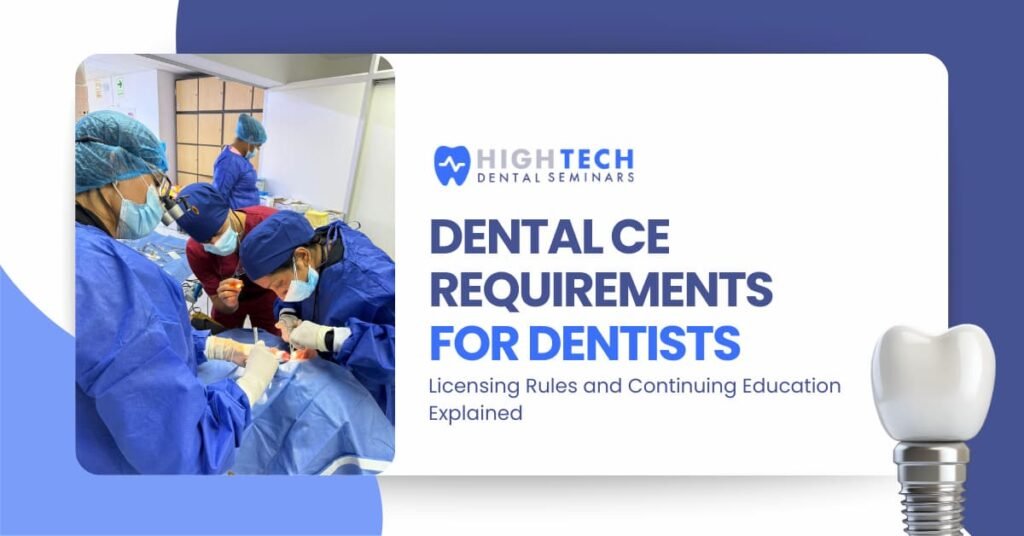
Continuing education is a regulatory requirement for dentists in most jurisdictions. Dental licensing authorities require clinicians to complete a defined number of continuing education (CE) hours to maintain an active professional license.
These requirements ensure that dentists remain current with evolving treatment protocols, emerging technologies, and modern clinical standards. Dentistry continues to advance rapidly, particularly in areas such as implant dentistry, digital workflows, and biomaterials.
Continuing education provides a structured pathway for dentists to update their knowledge while maintaining clinical competency.
Understanding the CE requirements for dentists is essential for maintaining licensure and planning professional development activities that support long-term clinical growth.
Many dentists use continuing education not only to meet licensing requirements but also to expand their clinical capabilities.
Hands-on implant education has become one of the most valuable forms of dental CE for clinicians seeking to integrate implant procedures into practice.
What Are Dental CE Requirements?
Dental CE requirements are the minimum number of continuing education hours that licensed dentists must complete during a defined reporting period to maintain their professional license.
These requirements are established by dental regulatory authorities and are intended to ensure that dentists maintain competency and stay updated with evolving clinical standards.
Continuing education activities may include:
- educational seminars
- professional conferences
- hands-on clinical training
- specialized implant education programs
How Many CE Credits Do Dentists Need?
Continuing education (CE) requirements are a mandatory part of maintaining an active dental license in most jurisdictions. While the exact requirements are established by individual dental regulatory authorities, the core objective remains the same: ensuring clinicians maintain professional competency throughout their careers.
Understanding Licensing Cycles
The number of CE credits required is typically tied to a reporting cycle or licensing period. Depending on the jurisdiction, these cycles may last between one and three years.
Common elements of CE requirements include:
Typical Credit Ranges
Many dental licensing boards require dentists to complete approximately 20–50 continuing education hours during each reporting cycle, although the exact number varies by jurisdiction.
Mandatory Subject Areas
Some regulatory authorities require dentists to complete a minimum number of hours in specific subject areas such as infection control, dental ethics, or jurisprudence.
Clinical vs. Non-Clinical Credits
Regulators often distinguish between clinical training and non-clinical education such as practice management or communication skills. In some jurisdictions, limits may apply to how many non-clinical hours can be counted toward license renewal.
Typical Requirements for Compliance
To ensure CE activities are accepted by a licensing authority, they must generally meet several criteria.
| Requirement | Description |
|---|---|
Approved Providers | Courses must be delivered by educational organizations recognized by the regulatory body. |
Documentation | Dentists must maintain certificates of completion and detailed records of CE activities. |
Regulatory Alignment | Training must comply with the professional standards and guidelines of the licensing jurisdiction. |
The Value of Hands-On Clinical Training
While online courses and lecture-based seminars can help fulfill theoretical requirements, many regulatory bodies and professional organizations recognize the importance of hands-on clinical training, particularly for procedures that require technical precision such as dental implant placement.
For clinicians learning complex surgical procedures, supervised clinical training often provides the most effective pathway for developing procedural awareness and confidence.
Note: Because CE requirements vary significantly between jurisdictions, dentists should always verify their specific licensing requirements directly with their local dental regulatory authority or professional college.
Why CE Requirements Exist in Dentistry
Dental continuing education requirements are designed to ensure that practicing dentists remain competent throughout their careers.
Clinical techniques, treatment materials, and diagnostic technologies continue to evolve. Continuing education helps dentists remain informed about these changes.
CE requirements serve several important purposes:
- maintaining clinical standards across the profession
- protecting patient safety
- encouraging lifelong professional development
- promoting adoption of modern treatment techniques
For many dentists, CE programs also provide an opportunity to explore new clinical disciplines such as implant dentistry.
Types of CE Activities That Count Toward Requirements
Dental regulatory authorities typically approve several types of educational activities that qualify for CE credits.
Educational Seminars and Conferences
Professional seminars and conferences allow dentists to learn from experienced clinicians and researchers. These events often cover emerging treatment techniques and clinical innovations.
Online Continuing Education Courses
Online CE programs allow dentists to complete educational requirements remotely. These programs often focus on theoretical topics and clinical updates.
While convenient, online education may not provide the same level of practical experience as hands-on programs.
Hands-On Clinical Training
Hands-on CE courses allow dentists to practice clinical procedures under instructor supervision.
These programs are particularly valuable for procedures that require technical precision, such as dental implant placement.
Hands-on training helps dentists develop procedural awareness and confidence.
Dentists who wish to expand their clinical capabilities often seek CE programs that provide hands-on surgical experience rather than lecture-only education.
High Tech Dental Seminars offers implant education programs designed for dentists seeking practical clinical exposure and surgical mentorship.
CE Requirements and Implant Training
Many dentists choose to fulfill part of their continuing education requirements through implant training programs.
Implant CE courses allow dentists to develop skills in areas such as:
- implant treatment planning
- surgical implant placement
- prosthetic restoration
- implant case management
Hands-on implant education provides practical experience that supports both professional development and practice growth.
Dentists interested in implant training can learn more through Hands-On Implant Courses for Dentists, which combine continuing education with practical clinical experience.
Conclusion
Dental CE requirements play an important role in maintaining the professional standards of modern dentistry. By requiring dentists to complete continuing education hours, regulatory authorities help ensure that clinicians remain informed about evolving treatment techniques and clinical best practices.
For many dentists, continuing education also represents an opportunity to expand clinical capabilities and explore new treatment disciplines.
Programs that combine theoretical instruction with hands-on clinical training can provide meaningful learning experiences that help dentists translate knowledge into practical skills.
As dentistry continues to evolve, continuing education will remain a critical component of professional development for practicing dentists.
Dentists interested in strengthening their clinical capabilities can explore implant training programs designed specifically for practicing clinicians.
High Tech Dental Seminars provides structured implant education programs that combine continuing education with practical surgical experience.
Continuing Education and Implant Training for Dentists
Continuing education providers play an important role in helping dentists expand their clinical capabilities and remain current with evolving treatment standards.
Educational organizations that specialize in implant training and advanced dental continuing education offer structured programs designed to help dentists develop new clinical competencies.
These programs often focus on:
- implant treatment planning
- surgical implant placement techniques
- restorative implant protocols
- management of implant complications
Programs that emphasize hands-on clinical training and supervised surgical experience allow dentists to translate theoretical knowledge into practical clinical skills.
Dentists interested in expanding their implant knowledge through continuing education can explore Hands-On Implant Courses for Dentists, which provide training opportunities that combine continuing education with practical implant experience.
Key Takeaways
- Dental CE requirements ensure that dentists maintain professional competency throughout their careers.
- Most licensing authorities require dentists to complete a defined number of CE hours within a reporting period.
- Continuing education helps dentists stay updated with modern clinical techniques.
- Hands-on training programs provide practical experience that supports clinical skill development.
- Implant education has become a major focus of continuing education for dentists seeking to expand their services.
Key Concepts in Dental Continuing Education
Continuing Education Requirements
Mandatory educational hours dentists must complete to maintain an active professional license.
CE Credits
Educational hours awarded for participation in approved continuing education activities.
Dental Implant Training
Educational programs that teach dentists implant treatment planning, surgical techniques, and restoration protocols.
Hands-On Clinical Training
Practical educational programs that allow dentists to perform clinical procedures in supervised environments.
Frequently Asked Questions
How many CE credits do dentists need?
The number of CE credits required varies by jurisdiction, but most dental licensing boards require dentists to complete between 20 and 50 CE hours during a reporting period.
Are dental CE courses mandatory?
Yes. Most dental regulatory authorities require dentists to complete continuing education hours to maintain an active license.
Can implant courses count toward dental CE requirements?
Yes. Many implant education programs offer continuing education credits that count toward licensing requirements.
What types of courses qualify for dental CE credits?
Approved CE activities may include seminars, conferences, online courses, and hands-on clinical training programs.
Reviewed by: (Add Authors Block)
Founder and Lead Instructor – High Tech Dental Seminars
20+ years surgical implant experience