
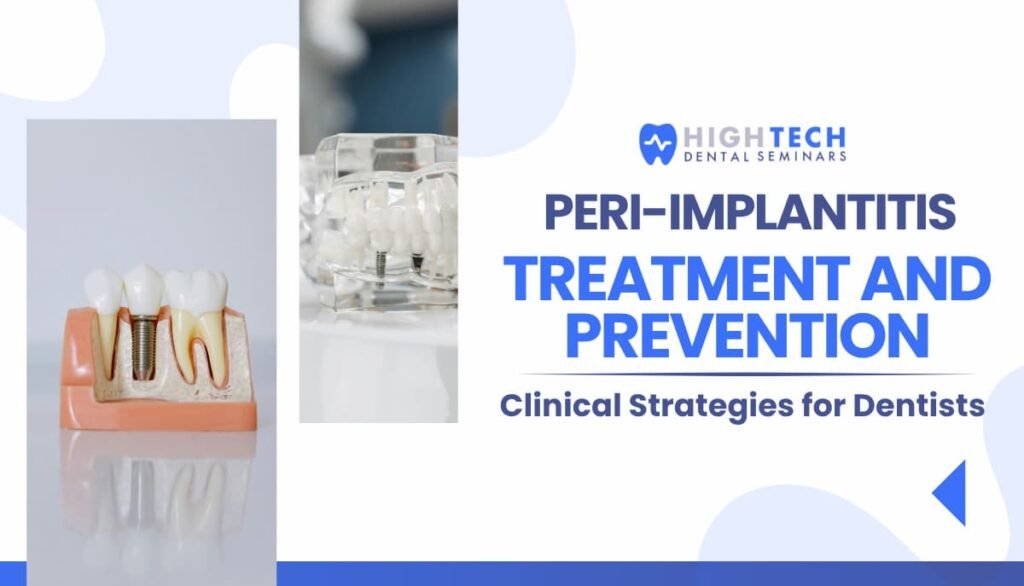
Peri-implantitis remains one of the most significant biological complications affecting dental implants. Characterized by inflammation of peri-implant tissues and progressive bone loss, peri-implantitis can compromise implant stability and long-term treatment success if not properly managed.
As implant therapy becomes increasingly integrated into general dental practice, clinicians must develop a clear understanding of both treatment protocols and preventive strategies. Unlike early implant failure, peri-implantitis is often a late complication associated with microbial biofilm, biomechanical factors, and patient-related risks.
For dentists providing implant care, effective management requires a combination of accurate diagnosis, risk assessment, and structured maintenance protocols.
Dentists seeking to improve implant outcomes and manage complications such as peri-implantitis benefit from hands-on implant training that emphasizes surgical and maintenance protocols. High Tech Dental Seminars offers structured implant education designed to help dentists strengthen clinical decision-making and complication management.
What Is Peri-Implantitis?
Peri-implantitis is a pathological inflammatory condition affecting the tissues surrounding a dental implant, characterized by bleeding on probing, increased probing depth, and progressive bone loss.
It is typically associated with:
- bacterial biofilm accumulation
- inadequate implant maintenance
- host-related risk factors
- biomechanical stress
If left untreated, peri-implantitis can lead to implant failure.
How Do Dentists Treat and Prevent Peri-Implantitis?
Dentists manage peri-implantitis through a combination of:
- mechanical debridement and biofilm removal
- antiseptic or antimicrobial therapy
- surgical intervention in advanced cases
- correction of prosthetic and occlusal factors
- implementation of structured maintenance protocols
Prevention focuses on early diagnosis, patient risk management, and regular implant maintenance.
Etiology and Risk Factors of Peri-Implantitis
Peri-implantitis is multifactorial in origin.
Primary contributing factors include:
- biofilm accumulation and microbial infection
- history of periodontal disease
- inadequate plaque control
- smoking
- systemic conditions such as diabetes
- prosthetic design that limits hygiene access
Biomechanical factors such as occlusal overload may also contribute by increasing stress on peri-implant tissues.
Understanding these risk factors is critical for both prevention and long-term implant success.
Diagnosis and Clinical Assessment
Accurate diagnosis is essential for effective management.
Key diagnostic indicators include:
- bleeding on probing
- suppuration
- increased probing depths
- radiographic bone loss
Baseline records taken at the time of prosthetic delivery are essential for comparison over time.
Clinicians should differentiate between:
- peri-implant mucositis (reversible inflammation)
- peri-implantitis (bone loss and progressive disease)
Early detection significantly improves treatment outcomes.
Non-Surgical Treatment Approaches
Initial management often involves non-surgical intervention.
These may include:
- mechanical debridement using specialized instruments
- ultrasonic or air-abrasive systems
- antiseptic agents such as chlorhexidine
- localized antimicrobial therapy
The goal is to reduce bacterial load and control inflammation.
However, non-surgical treatment alone may be insufficient in advanced cases.
Surgical Treatment Protocols
Surgical intervention is indicated when non-surgical therapy fails or when significant bone loss is present.
Surgical approaches may include:
- open flap debridement
- implant surface decontamination
- resective procedures
- regenerative techniques using bone grafts
The choice of surgical approach depends on defect morphology and implant stability.
Advanced implant training often emphasizes case selection and surgical decision-making in these scenarios.
Dentists managing peri-implant disease benefit from training that integrates diagnosis, surgical protocols, and long-term maintenance strategies.
High Tech Dental Seminars provides implant training programs designed to help dentists develop clinical confidence in managing implant complications.
View implant training opportunities
Maintenance and Prevention Strategies
Long-term implant success depends heavily on prevention.
Key strategies include:
- regular maintenance visits
- professional implant cleaning
- patient-specific hygiene protocols
- monitoring of peri-implant tissues
- occlusal assessment
Implant maintenance programs should be tailored based on patient risk factors.
Preventive care is often more predictable than treatment of advanced peri-implant disease.
Prosthetic Design and Hygiene Accessibility
Prosthetic design plays a critical role in peri-implant health.
Poorly designed restorations may:
- restrict access for hygiene
- promote plaque accumulation
- increase risk of inflammation
Clinicians should ensure:
- adequate emergence profile
- accessible contours
- proper implant positioning
Treatment planning must consider both surgical and prosthetic outcomes.
Implant Training and Peri-Implant Disease Management
Managing peri-implantitis requires both theoretical knowledge and clinical experience.
Hands-on implant training programs allow dentists to:
- diagnose peri-implant disease accurately
- perform surgical and non-surgical treatment
- optimize prosthetic design
- implement maintenance protocols
Dentists interested in developing advanced implant skills can explore:
Hands-On Implant Courses for Dentists
Clinicians seeking exposure to advanced surgical cases may also consider:
Conclusion
Peri-implantitis represents a complex biological complication that can significantly affect implant success if not properly managed.
Effective treatment requires early diagnosis, appropriate intervention, and long-term maintenance strategies. Prevention remains the most predictable approach, emphasizing the importance of risk assessment and regular monitoring.
For dentists providing implant therapy, understanding peri-implant disease is essential for maintaining long-term treatment success and improving clinical outcomes.
Dentists seeking to strengthen their ability to manage implant complications and improve long-term outcomes can explore hands-on implant training programs designed for practicing clinicians.
High Tech Dental Seminars offers implant education that integrates surgical principles, treatment planning, and complication management.
Key Takeaways
- Peri-implantitis is a biological complication characterized by inflammation and bone loss
- Early diagnosis is critical for successful treatment
- Non-surgical therapy may be effective in early stages
- Advanced cases often require surgical intervention
- Long-term maintenance and prevention are essential for implant success
Implant Education and Disease Management
Advanced implant education plays a critical role in helping dentists manage complications such as peri-implantitis.
Training programs focused on implant dentistry typically include:
- diagnosis of peri-implant diseases
- surgical and non-surgical treatment protocols
- implant maintenance strategies
- prosthetic design considerations
Hands-on training environments allow dentists to apply these principles in clinical scenarios.
Dentists interested in strengthening their implant knowledge can explore Hands-On Implant Courses for Dentists, which provide structured clinical education and practical experience.
Key Concepts in Peri-Implant Disease
Peri-Implantitis
An inflammatory condition affecting implant-supporting tissues, associated with bone loss.
Peri-Implant Mucositis
Reversible inflammation of peri-implant soft tissues without bone loss.
Biofilm
A structured community of microorganisms that contributes to implant infection.
Implant Surface Decontamination
Procedures used to remove contaminants from implant surfaces during treatment.
Frequently Asked Questions
What is peri-implantitis?
Peri-implantitis is an inflammatory condition affecting tissues around an implant, leading to bone loss and potential implant failure.
How is peri-implantitis treated?
Treatment may include non-surgical debridement, antimicrobial therapy, and surgical intervention depending on severity.
Can peri-implantitis be prevented?
Yes. Prevention includes proper maintenance, hygiene protocols, and regular monitoring of peri-implant tissues.
What is the difference between mucositis and peri-implantitis?
Mucositis involves soft tissue inflammation without bone loss, while peri-implantitis includes progressive bone loss.
Reviewed by:
Founder and Lead Instructor – High Tech Dental Seminars
20+ years surgical implant experience
Sources
- Berglundh T, et al. Journal of Clinical Periodontology
- Lang NP, Berglundh T. Journal of Clinical Periodontology
- Schwarz F, et al. Clinical Oral Implants Research