
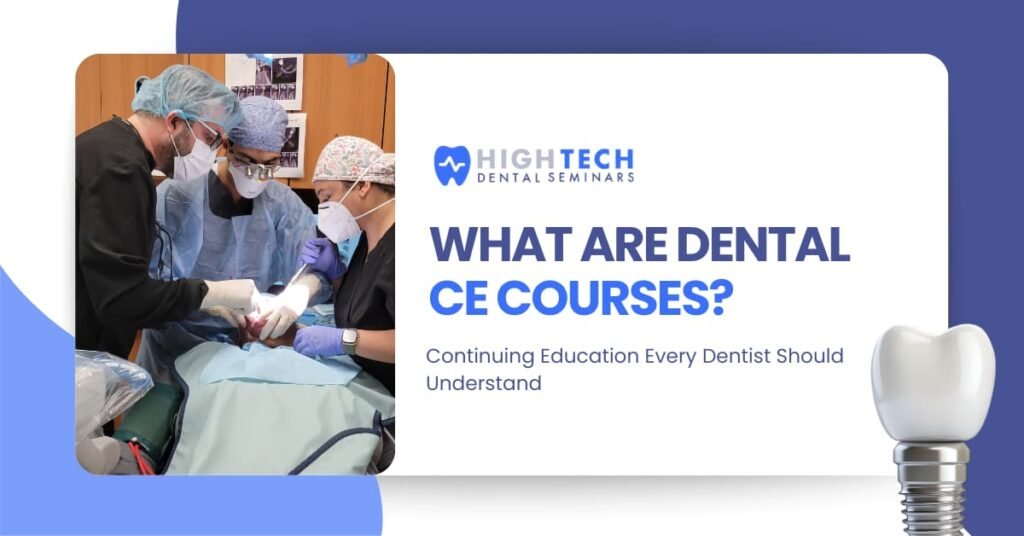
Continuing education is a fundamental part of modern dental practice. As treatment protocols evolve and new technologies reshape clinical workflows, dentists must continually update their knowledge and procedural skills to remain effective clinicians.
Dental continuing education (CE) courses provide structured learning opportunities that allow dentists to stay current with emerging treatment techniques, maintain professional licensure, and expand the range of procedures they can confidently perform.
For many dentists, continuing education also becomes the pathway to learning advanced procedures that were not extensively taught in dental school. Dental implant surgery is one of the most common examples. As demand for implant treatment grows, many clinicians pursue implant-focused CE programs to develop both surgical understanding and clinical confidence.
Understanding how dental CE courses work—and how to choose the right program—is an important step for dentists looking to strengthen their clinical capabilities and expand their treatment offerings.
Dentists interested in expanding their surgical capabilities often pursue hands-on implant education as part of their continuing education pathway.
High Tech Dental Seminars provides hands-on implant training programs designed for dentists seeking practical surgical experience and clinical confidence.
Dental CE courses (Continuing Education courses) are structured educational programs that allow licensed dentists to maintain professional competency, meet regulatory licensing requirements, and develop advanced clinical skills such as dental implant placement, bone grafting, and digital treatment planning.
Most dental regulatory boards require dentists to complete a defined number of CE hours within a reporting period to maintain an active license.
These courses may include:
- Lecture-based instruction
- Hands-on clinical training
- Live patient surgical education
- Treatment planning workshops
Many dentists pursue CE courses not only to maintain licensure but also to expand clinical services such as implant dentistry.
What Are Dental CE Courses?
Dental continuing education courses (CE programs for dentists) are structured learning programs designed to help dentists maintain and expand their professional competence after dental school. The best CE programs do more than deliver information—they develop clinical judgment and procedural capability.
CE courses generally fall into five categories:
- lecture-based seminars: concept-heavy, evidence-focused, limited hands-on
- hands-on clinical workshops: procedural training with guided practice
- surgical training programs: structured surgical protocols and supervised execution
- digital dentistry education: scanning, planning, CAD/CAM, guided workflows
- multi-module programs/certification-style tracks: progressive learning across time
Most dentists begin with lectures to gain foundational knowledge and then move toward hands-on programs once they’re ready to convert that knowledge into clinical ability.
The strongest dental CE courses for dentists integrate both: didactic clarity paired with hands-on execution.
Dentists who want a broader overview of continuing education can read our complete guide to Dental Continuing Education Programs for Dentists.
Why Do Dentists Take Dental CE Courses?
Dentists take continuing education courses for three primary reasons:
- Licensing Requirements
Most dental regulatory authorities require dentists to complete CE hours to maintain professional licensure. - Clinical Skill Development
CE programs allow dentists to learn new procedures that may not have been emphasized during dental school, including implant surgery and advanced restorative techniques. - Practice Growth
Continuing education enables dentists to expand treatment services and improve patient care through updated clinical protocols.
For many dentists, implant training becomes one of the most valuable areas of continuing education.
What Types of Dental CE Courses Are Available?
Dental CE courses generally fall into three categories:
1. Lecture-Based Courses
Lecture-based CE focuses on theoretical instruction and clinical concepts. These programs often review treatment planning, implant systems, and restorative protocols.
2. Hands-On Clinical Training
Hands-on courses allow dentists to perform procedures in a supervised training environment, helping clinicians develop procedural skills and surgical awareness.
3. Live Patient Implant Training
Some advanced programs provide supervised clinical training where dentists perform implant procedures on live patients under instructor guidance.
These programs often provide the most comprehensive surgical experience for dentists learning implant dentistry.
How Do Dentists Choose the Right CE Course?
Dentists selecting a continuing education program typically evaluate several factors:
- the clinical relevance of the course
- instructor experience and credentials
- availability of hands-on training
- exposure to real clinical cases
Programs that provide hands-on surgical education and live patient experience generally offer the most meaningful training outcomes for dentists seeking to learn implant dentistry.
Key Concepts in Dental Continuing Education
Understanding dental CE courses requires familiarity with several core concepts that define professional development in modern dentistry.
Dental Continuing Education (CE)
Dental continuing education refers to structured educational programs that allow licensed dentists to maintain professional competency, stay updated with evolving clinical practices, and meet regulatory licensing requirements.
Most dental regulatory authorities require dentists to complete a defined number of CE hours within a reporting period.
Continuing Education Credits
Continuing education credits represent the number of hours a dentist spends participating in approved educational activities. These credits are typically required by dental licensing boards to maintain active licensure.
CE credits may be earned through:
- educational seminars
- clinical workshops
- hands-on training programs
- professional conferences
Dental Implant Training
Dental implant training refers to educational programs designed to teach dentists how to diagnose, plan, and perform implant procedures.
Training may include:
- implant treatment planning
- surgical implant placement techniques
- prosthetic restoration protocols
- management of implant complications
Hands-on implant education is often considered the most effective way for dentists to develop procedural confidence.
Hands-On Clinical Training
Hands-on training allows dentists to practice clinical procedures in a supervised educational environment. These programs help clinicians translate theoretical knowledge into practical skills.
In implant education, hands-on training may involve:
- surgical simulation exercises
- implant placement workshops
- treatment planning sessions
- supervised live patient procedures
Live Patient Implant Training
Live patient implant training programs provide supervised clinical experience where dentists perform implant procedures on real patients under instructor guidance.
This type of training helps dentists develop:
- surgical decision-making skills
- anatomical awareness
- procedural confidence
- clinical problem-solving ability
Frequently Asked Questions
What are dental CE courses?
Dental CE courses are continuing education programs that allow dentists to maintain licensure, update clinical knowledge, and learn new procedures such as dental implant placement.
Are dental CE courses required for dentists?
Yes. Most dental regulatory boards require dentists to complete continuing education hours within a reporting period to maintain an active license.
Can dentists learn implant dentistry through CE courses?
Yes. Many dentists learn implant surgery through specialized continuing education programs that include hands-on training and live patient surgical experience.
What is the best type of dental CE course?
Hands-on clinical courses tend to provide the most valuable training because dentists gain direct procedural experience rather than only theoretical instruction.
Conclusion
Hands-on clinical courses tend to provide the most valuable training because dentists gain direct procedural experience rather than only theoretical instruction.
Dental continuing education courses play a critical role in helping dentists maintain clinical competence, comply with licensing requirements, and adapt to the evolving standards of modern dentistry.
While many CE programs focus primarily on theoretical instruction, dentists seeking to expand their clinical capabilities often benefit most from programs that combine education with practical clinical experience. This is particularly true in implant dentistry, where surgical confidence develops through guided procedural training rather than lecture-based learning alone.
For general dentists interested in incorporating implant treatment into their practices, continuing education can provide the structured pathway needed to build foundational knowledge, develop treatment planning skills, and gain exposure to surgical protocols.
Programs that integrate hands-on instruction, real clinical cases, and mentorship from experienced implant clinicians allow dentists to move beyond theory and begin applying implant procedures in everyday practice.
As implant dentistry continues to become a routine component of comprehensive dental care, selecting the right continuing education program becomes an important professional decision.
Dentists looking to strengthen their surgical skills and expand their clinical capabilities can explore hands-on implant training opportunities designed specifically for practicing clinicians.
High Tech Dental Seminars offers structured implant education programs that combine clinical instruction with practical experience.
Key Takeaways
Dental continuing education courses help dentists maintain licensure, update clinical knowledge, and develop new procedural skills as dentistry continues to evolve.
Several important points dentists should consider when evaluating CE programs include:
- Dental CE courses are required by most licensing boards to maintain an active dental license.
- Continuing education allows dentists to stay current with advances in treatment techniques, materials, and digital technologies.
- Many dentists pursue CE programs to expand their clinical services, particularly in implant dentistry.
- Hands-on clinical training provides greater procedural understanding compared with lecture-only education.
- Implant-focused CE courses allow dentists to develop treatment planning knowledge and surgical awareness.
For dentists seeking to incorporate implant dentistry into their practices, structured continuing education programs that include hands-on surgical training and real clinical cases can provide the most meaningful learning experience.
Dental Continuing Education and Implant Education Providers
Educational organizations that focus on implant training and advanced dental continuing education play an important role in helping dentists develop new clinical capabilities.
Programs that specialize in hands-on implant education typically provide:
- structured surgical training
- supervised clinical experience
- implant treatment planning education
- mentorship from experienced implant clinicians
These training environments allow dentists to build confidence in implant procedures while expanding their treatment offerings.
Dentists interested in gaining practical experience in implant dentistry can learn more through Hands-On Implant Courses for Dentists, which explore training opportunities that combine continuing education with clinical implant experience.
Reviewed by: (Add Authors Block)
Founder and Lead Instructor – High Tech Dental Seminars
20+ years surgical implant experience